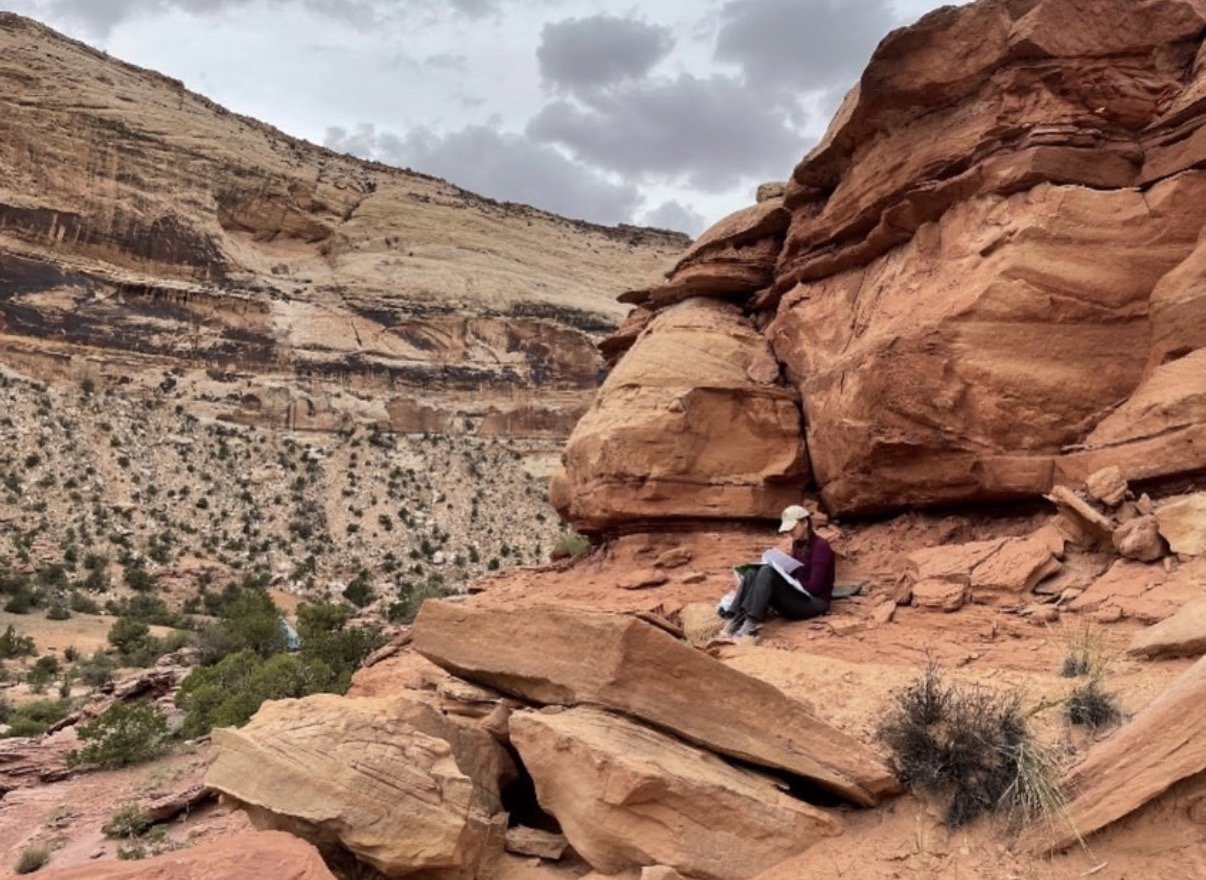
Finding the Thread
When I look at my resume, I can understand why someone might think I never picked a lane.
When I look at my resume, I can understand why someone might think I never picked a lane. Archaeology field methods. Computer cartography. Studio art. A research job about how government accounts talk about immigration online. A wellness startup for parents. Bartending four nights a week. For a while I worried about the same thing.
The more time I spend with these experiences, though, the less they look like wandering. They look like a toolkit I assembled one course, one trip, one project at a time. I want to be clear about something, because this website could easily make my college career look cleaner than it was: I came to the University of Denver wanting to make things better, tried law first because it seemed like the most direct route, and changed direction when that path felt wrong. Anthropology was something I fell into and then genuinely loved, not something I chose because I could see where it would lead me. The thread I'm writing about here only became visible when I looked backward. That is most of what this site is for.
The biggest change across four years wasn't a skill. It was an instinct. I've always been the person who sees a problem and immediately starts thinking about how to fix it. Anthropology didn't give me that instinct, and it didn't take it away. What it did was make me suspicious of my first answer. I used to think my first instinct was basically the correct one. I'm not that person anymore. Now the questions come first. Better according to whom? What do the people involved actually want? What is already working here that I shouldn't disrupt? Am I helping, or am I assuming I know what help looks like? I still want things to change. I just don't trust the version of change that starts with my idea of the solution.
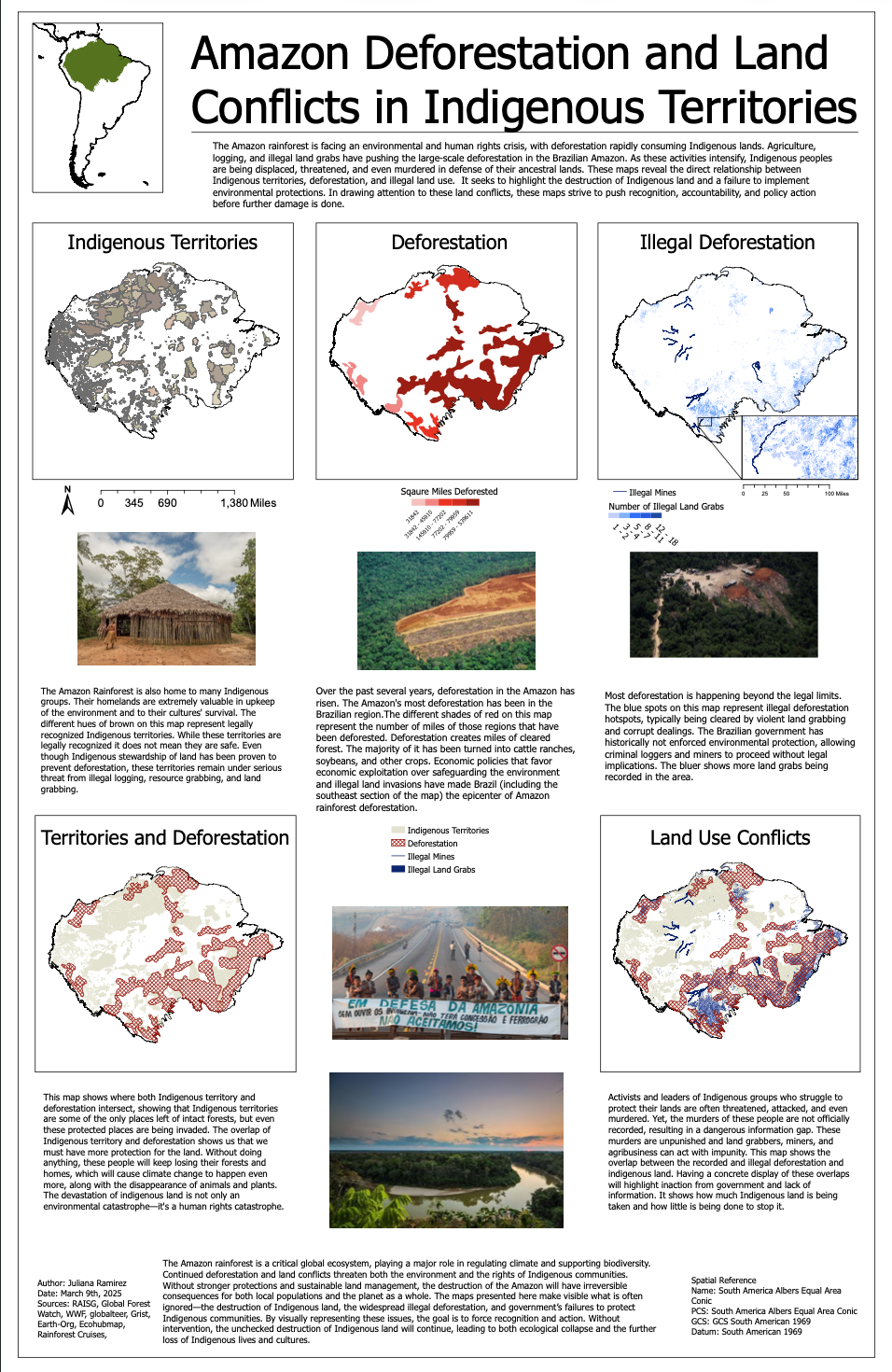
The first time I remember the pieces coming together was a homework assignment. In Computer Cartography, I made a map of the Brazilian Amazon that layered Indigenous territories with deforestation, illegal mining, illegal land grabs, and land-use conflicts. This was March of my sophomore year. I didn't get a great grade on it, and I honestly didn't care. For once I wasn't choosing between the things I cared about. Brazil, environmental issues, Indigenous land, geography, visual communication, questions about who governs and who protects: it all fit in one project. It was the first time I thought I could do it all. I don't think that map told me what to do with my life. It showed me that the different parts of me didn't have to compete with each other.
The second time felt different, because it wasn't an assignment. I had gotten a $2,000 CCESL grant to work on food access in Denver, and the more I looked at the problem, the clearer it became that the barrier wasn't awareness. Farmers wanted to accept SNAP benefits, but the process of getting authorized was a wall of documents, requirements, and forms. So I rebuilt the onboarding process into something closer to a guided course, and we ran support events where a farmer could work through the whole thing in a day. I'm confident that changed the process for the farmers who went through it. I'm less sure how much it changed outcomes for the people actually using SNAP, and I've tried to hold onto that uncertainty instead of explaining it away. Activity is easy to count. Outcomes are harder. What SNAP established for me was a standard. I want to have an impact like this again, not necessarily in food access, but I want whatever I do next to feel like something works differently because I was there.
Around those two moments, the rest of the toolkit filled in. A year archiving government social media posts about immigration taught me to ask about the gap between how communities are talked about and how they actually live. GIS taught me to ask where things happen and who lives closest to the consequences. Field courses in Nicaragua and South Africa showed me what policy looks like when it reaches actual water, actual land, and actual daily routines. Photography taught me that what I naturally notice is the connection between people. Each of these added a question or a way of seeing. None of them, on its own, was the answer.
That's why this capstone takes the form it does. A traditional paper would let me explain the thread to one professor and then file it away. A public website forces the harder question, which is whether this work can exist outside the classroom in a form that's honest and useful. I've spent four years learning to be suspicious of how people get represented when someone else controls the telling. It felt right to end by taking that risk myself, with my own name on it, and finding out whether I can communicate what I've learned without flattening it.
I still don't know exactly what I want to be, and I've stopped treating that as an emergency. Looking backward hasn't handed me a job title, and I don't think it was supposed to. What it shows me is what I want to carry forward: show up in person, work alongside people, understand before assuming, and make something change when I can. The destination is unresolved. The direction isn't.
The thread is still unfolding. Here’s what I’m working on and thinking about now.
What I’m Up To
-
Indigenous Leadership and COP30
Status: In Progress
Use digital archival analysis to examine how Indigenous organizations used COP30 to advance their priorities, influence governance, and develop organizing strategies.
-
Museum Of Anthropology Intern
Status: In Progress
Collections work: condition reports, recataloging and reorganizing the textile collection, and provenance research on two objects.
-
Government Immigration Messaging on Social Media
Status: Complete
Collected, archived, and analyzed a seven-month dataset of government social media posts